Gallery
Current Artworks on Display
Two Sparrows with Rambutan Tree
Chen Wen Hsi
In Two Sparrows with Rambutan Tree, Chen blends traditional Chinese techniques with personal observation to create this elegant picture of two small sparrows gracefully interacting on a textured rock. Above them, a rambutan tree extends diagonally, heavy with broad leaves and round, spiky fruits.
Read moreStudio I
Chen Wen Hsi
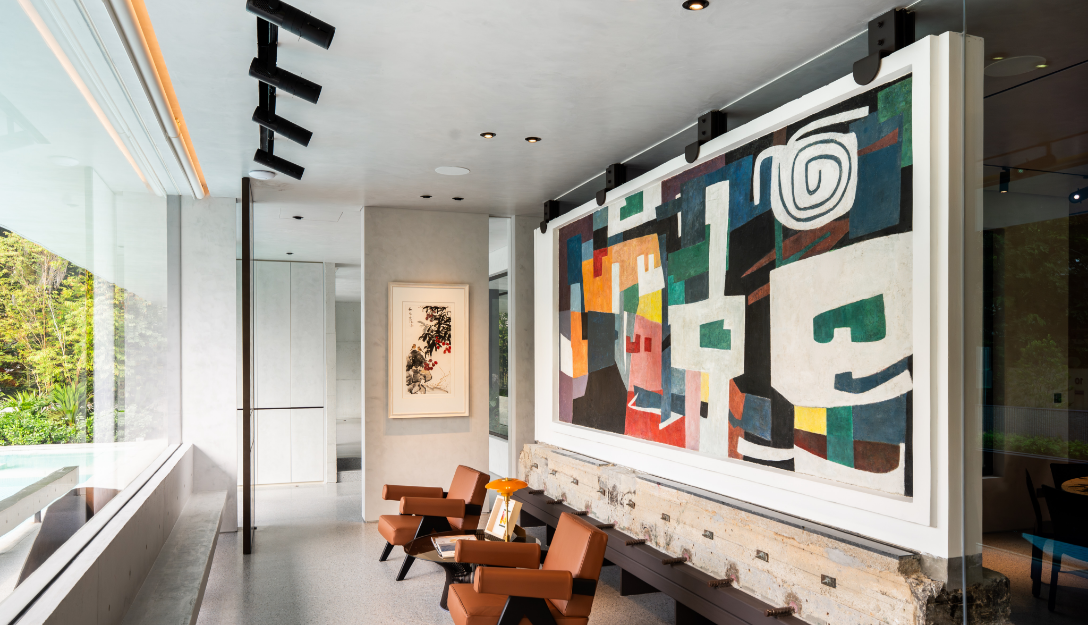
In 1958, Chen moved from the teachers’ quarters at the Chinese High School to his new house at 5 Kingsmead Road, located less than a kilometre from the campus. Around a year later, he had a stretch of double-sided wall specially constructed near the front porch and spent the next few years creating an abstract mural piece on each side. Studio I, which stands at a monumental size of 178 x 420 cm, is the bigger of the two murals.
Read more HistoryStudio II
Chen Wen Hsi
In 1958, Chen moved from the teachers’ quarters at the Chinese High School to his new house at 5 Kingsmead Road, located less than a kilometre from the campus. Around a year later, he had a stretch of double-sided wall specially constructed near the front porch and spent the next few years creating an abstract mural piece on each side. These murals were site-specific, integrated into the architecture of Chen’s residence. Their original positioning near the porch suggests that they were meant to be experienced intimately, as a window into the artist’s abode and a daily encounter between art and life.
Read more History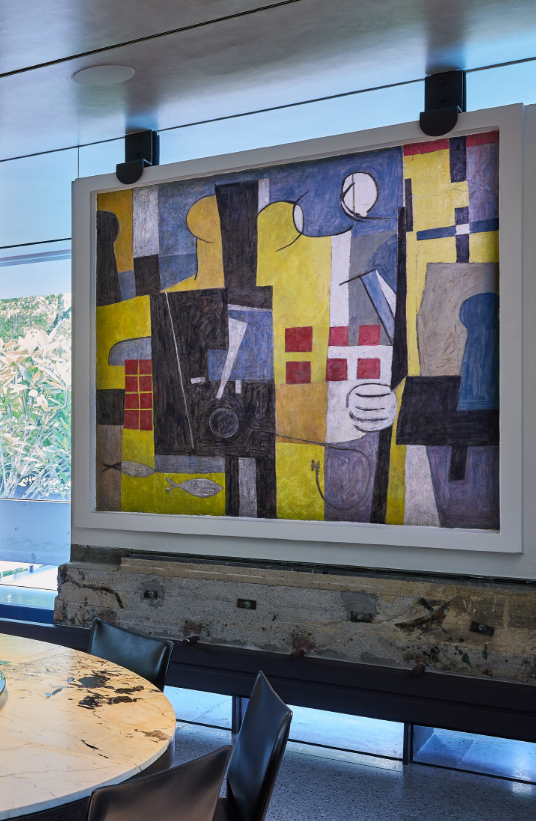
Puppets
Chen Wen Hsi
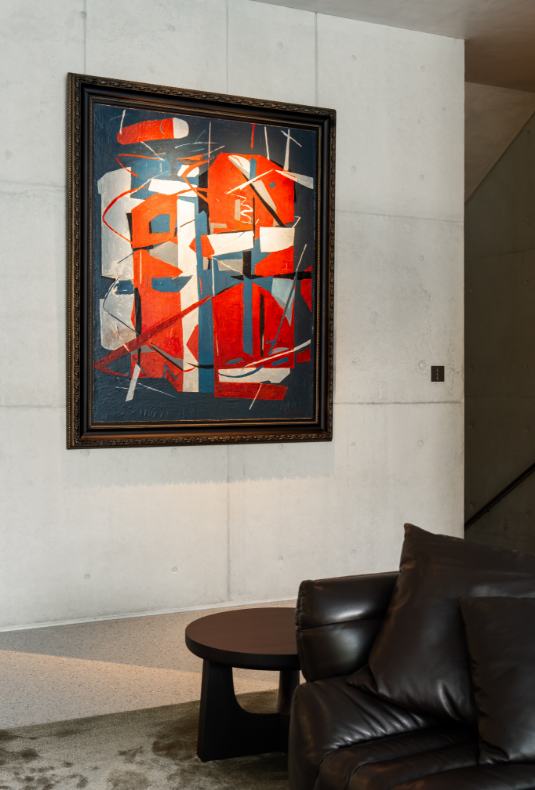
Flat and striking in its bold simplicity, Puppets is characteristic of Chen’s spirited engagement with geometric abstraction as a visual language in the period of 1950s-1960s. The composition is parred down to angular planes, intersecting lines, and pure shapes with hard and soft edges. Red, the most dominant colour, anchors as solid mass but also pulses across the surface with urgency, tempered by cooler blues and whites that provide interesting contrast and spatial tension.
Read moreKampong Scene
Cheong Soo Pieng
Kampong Scene, executed in Chinese ink and colour on Chinese rice paper, is exemplary of Cheong’s early body of Nanyang ink work. The painting depicts a dense coastal village characterised by wooden stilt houses, boats, coconut trees, and local inhabitants engaged in daily life.
Read more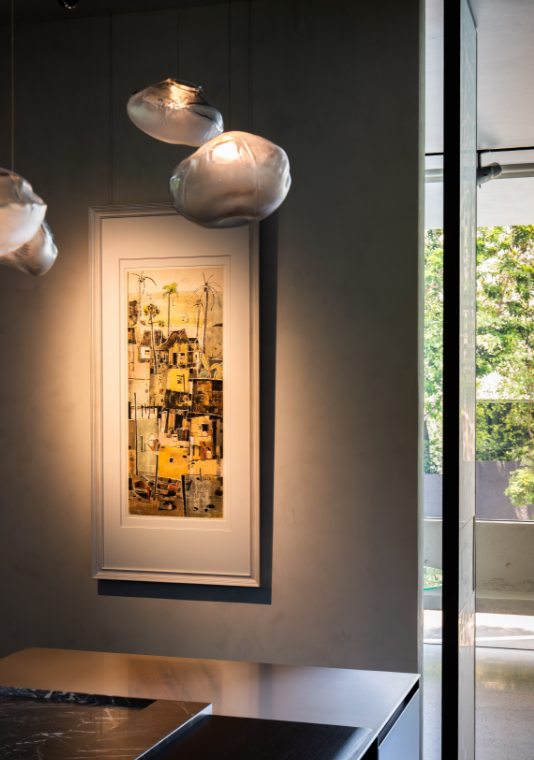
Herons
Chen Wen Hsi
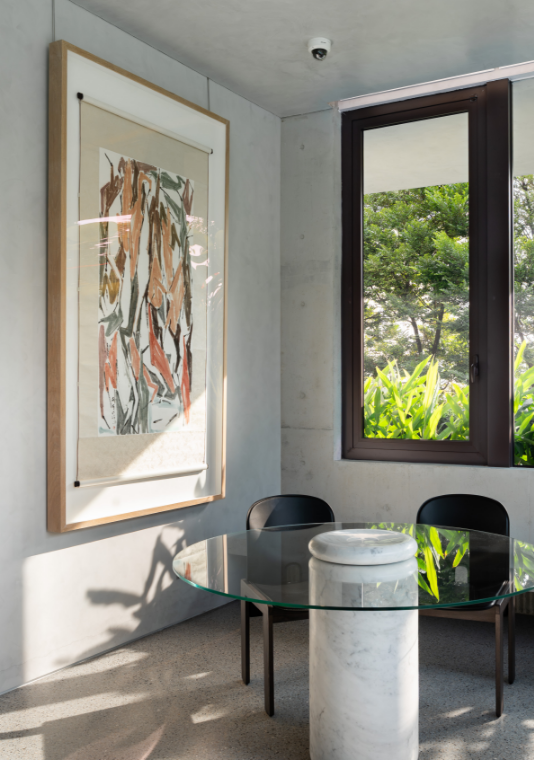
Herons is a fine example of Chen’s East-West abstraction style, where he pushes the boundaries of traditional Chinese ink and color painting towards a bold, modern visual language. Chen breaks from realism to reveal a gathering of herons in this composition, which borders on pure form and gesture. His treatment of the subject feels organic yet geometric, vibrant yet meditative.
Read more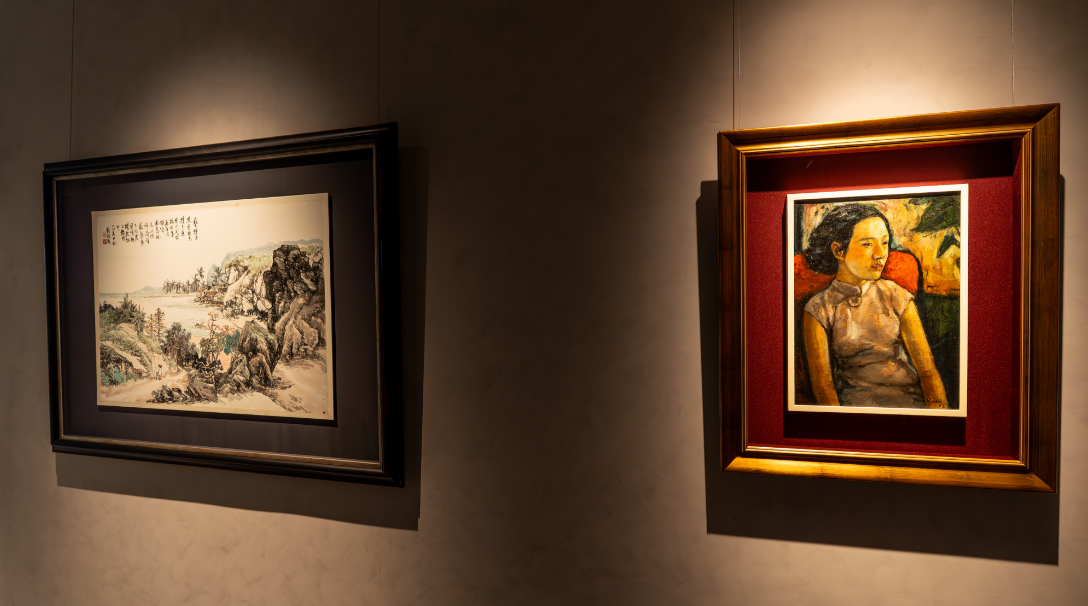
Nanyang Landscape
Chen Chong Swee
Nanyang Landscape is a powerful example of how Chen masterfully adapted traditional Chinese ink painting techniques to depict Southeast Asian scenery, embodying the ideals of the Nanyang art movement. Chen employs a classical shanshui (山水) format - the Chinese landscape painting tradition - to present the natural environment surrounding a Malay fishing village. He introduces localised motifs such as coconut palms, coastal huts, and tropical flora and fauna to replace grand mountains, Chinese pines and tiled pavilions.
Read moreThe Young Girl
Lim Yew Kuan
This portrait of a young lady is a striking example of Lim’s early figurative work and reveals his ability to blend realism with psychological depth. The lady wears a cheongsam, a traditional Chinese dress, anchoring the work in a local Chinese context. She is portrayed in a poised but introspective moment. Lim’s choice of a restrained, earthy palette enhances the emotional subtlety. Muted purples, browns, and greys are punctuated by the deep red of the chair, which draws focus and adds visual warmth. A diffused light source gently models the face and body, creating a soft, cinematic mood.
Read more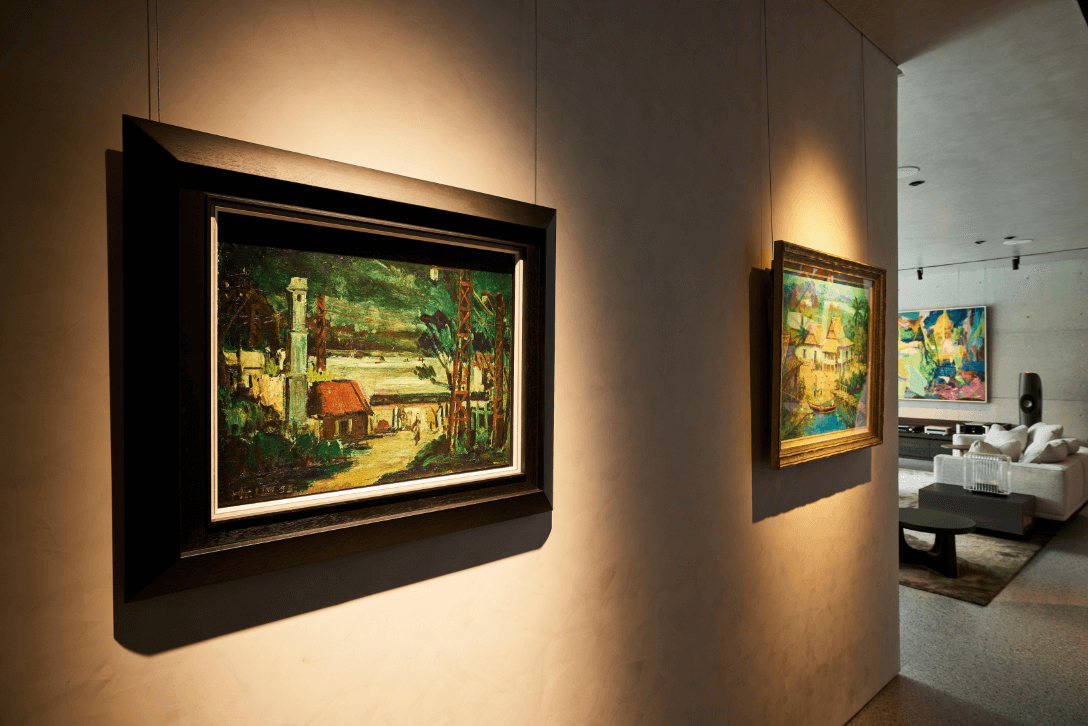
Night at Keppel
Lim Hak Tai
Night at Keppel from 1955 reveals a careful balance between structural clarity and lyrical sensibility, reflecting Lim’s modern academic training and expressive use of form and colour. The scene is anchored by rural dwellings and a tower-like structure, with a vista that recedes towards a harbour in the distance.
Read moreKampong Scene
Liu Kang
In this vivid portrayal of rural Malay life, Liu captures the warmth, rhythm, and simplicity of a traditional Malay coastal community. Activities unfold in an open courtyard while chickens and geese scatter across the sunlit ground. The villagers attend to their daily routines amidst stilted wooden houses and swaying palm trees. In the foreground, a boat rests by a wooden pier, opening out to a gentle blue waterway that leads the viewer’s eye into the lush, rolling landscape beyond.
Read more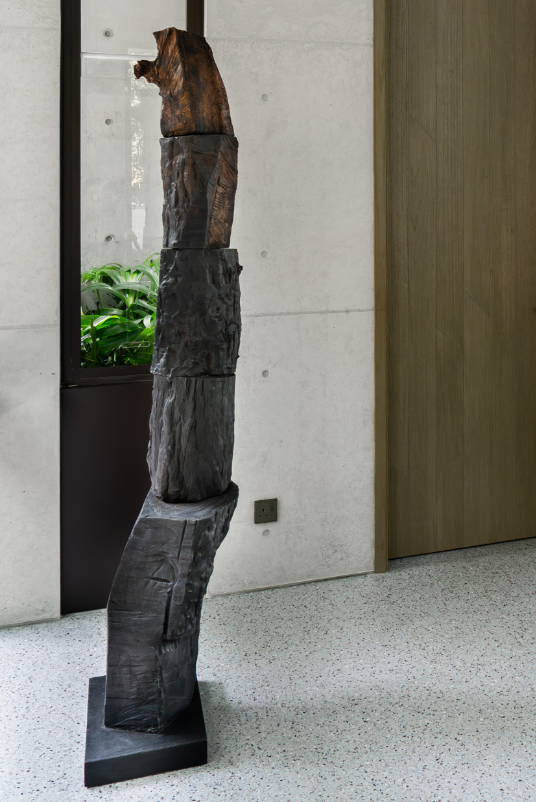
A Tree
Lim Soo Ngee
Lim’s sculptures are distinguished by their figurative forms and whimsical narratives, often exploring the complex interplay between humanity, society, and the natural world. Rather than grandiose monuments, his works are quiet, poetic meditations on life, time, and memory - inviting reflection through their subtlety and wit.
Read moreStill Life with Star Fruit
Georgette Chen
Working primarily in oil paint, Chen depicted Southeast Asian themes with a refined, painterly sensibility. Her subjects included tropical fruits, traditional festivals, local landscapes, and the daily lives of people in Singapore and Malaysia. Despite her cosmopolitan background, Chen expressed a deep sensitivity to the everyday beauty of her adopted Southeast Asian environment.
Read more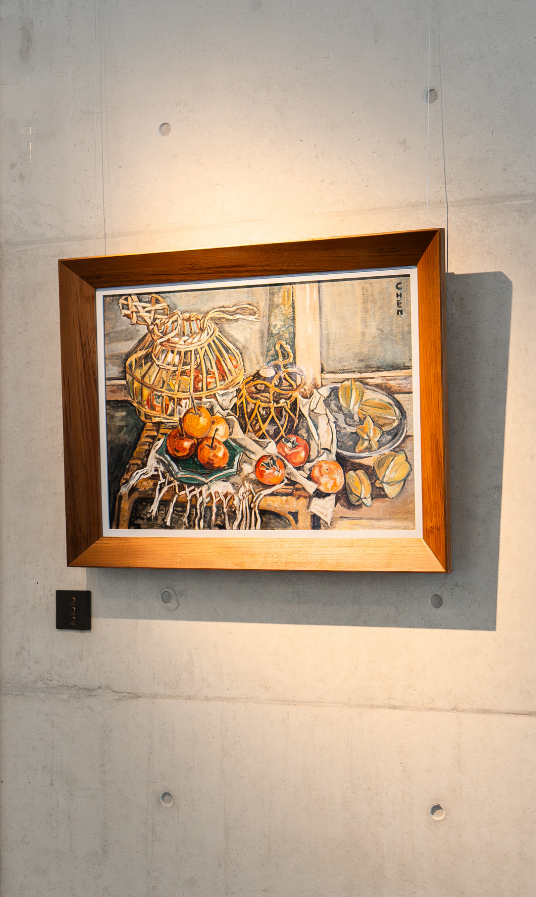
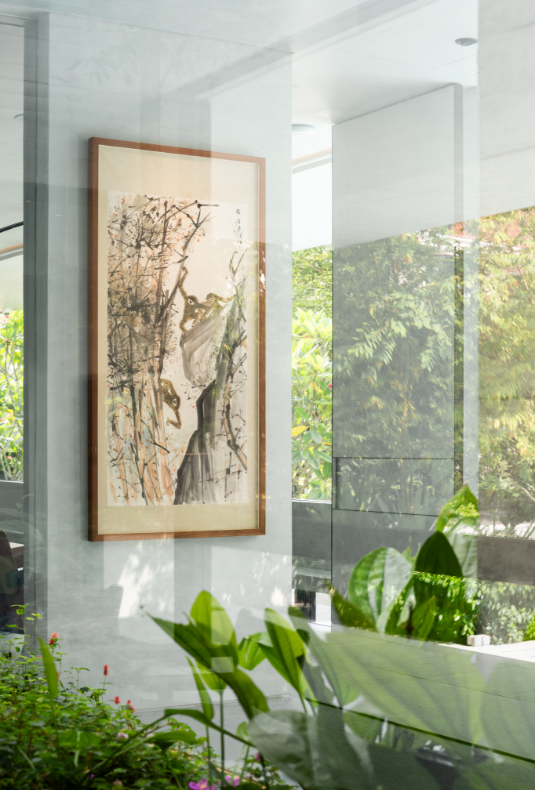
Gibbons
Chen Wen Hsi
The gibbons in Chen’s work were painted from memory as well as observation of the gibbons he kept in his home garden. This ink painting of three gibbons in a Chinese vertical scroll format draws the viewer’s eye from top to bottom, following the path of the gibbons as they move through layers of angular trees and rocky cliffs.The fluid and expressive forms of the gibbons are rendered in a style that evokes motion, playfulness, and an organic connection with nature.
Read moreSplendour in the Grass
Wong Keen
Splendour in the Grass, which was inspired by lotus in nature, exemplifies Wong’s mature synthesis of Chinese painterly sensibility and Western abstraction. Colours collide, resist,and seep into surrounding forms, pulling together an intensely chromatic field that is familiar yet ethereal.
Read more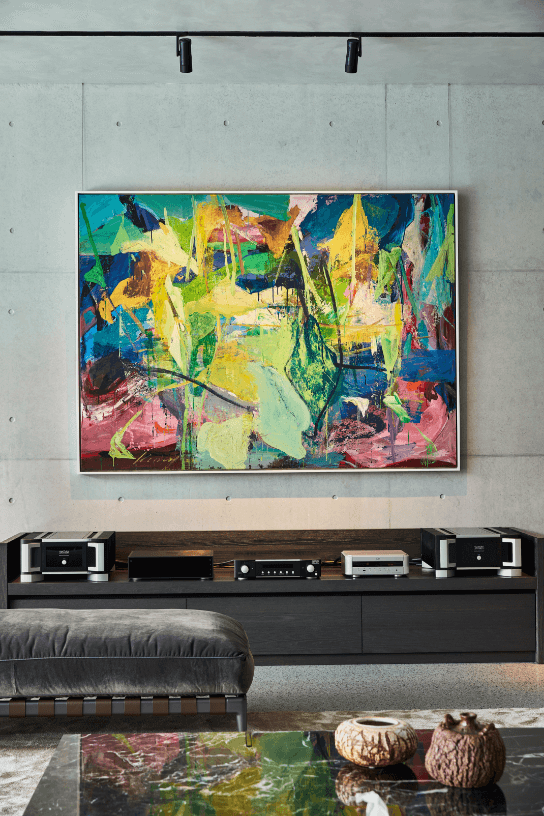
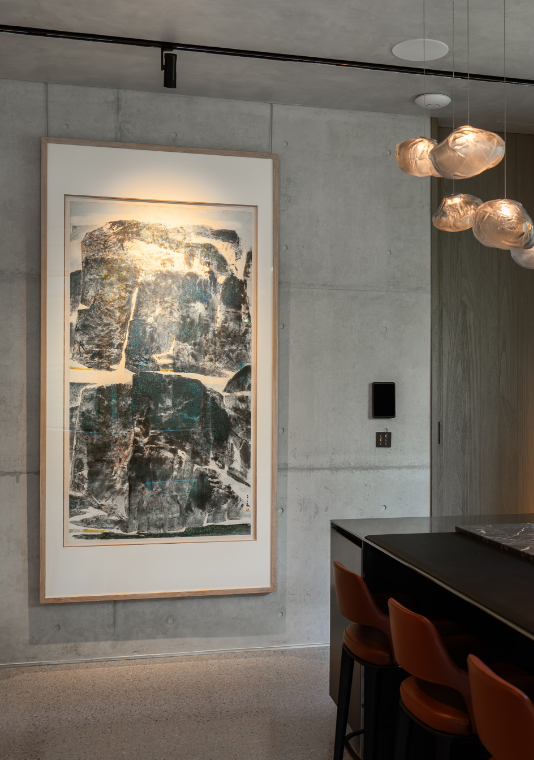
Blue Mountain
Chen Wen Hsi
Blue Mountain reflects Chen’s mature synthesis of traditional Chinese ink painting and modern abstraction. The mountains are suggested through broad, angular brushstrokes, layered with tonal washes of black, blue, and grey. Chen breaks away from the intricate detailing often found in classical shanshui (山水; mountain-river landscape) painting, but retains the application of dry, rubbing techniques to evoke the rough, jagged textures of cliffs and rocks.
Read moreLarge Bamboo and Rock
Fan Chang Tien
Large Bamboo and Rock embodies the refined, scholarly tradition of Chinese painting, where brushwork is not only a technical exercise but a direct reflection of the artist’s inner state. The work demonstrates Fan’s expressive brushwork, rhythm, and calligraphic elegance.
Read more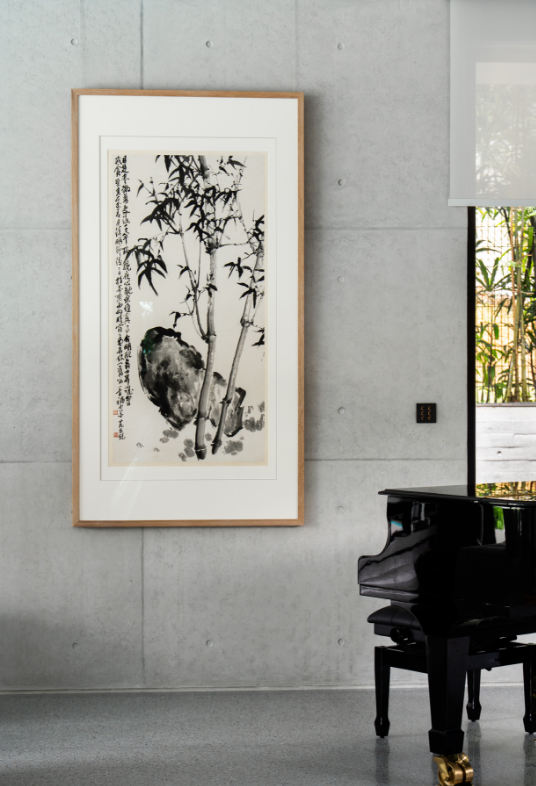
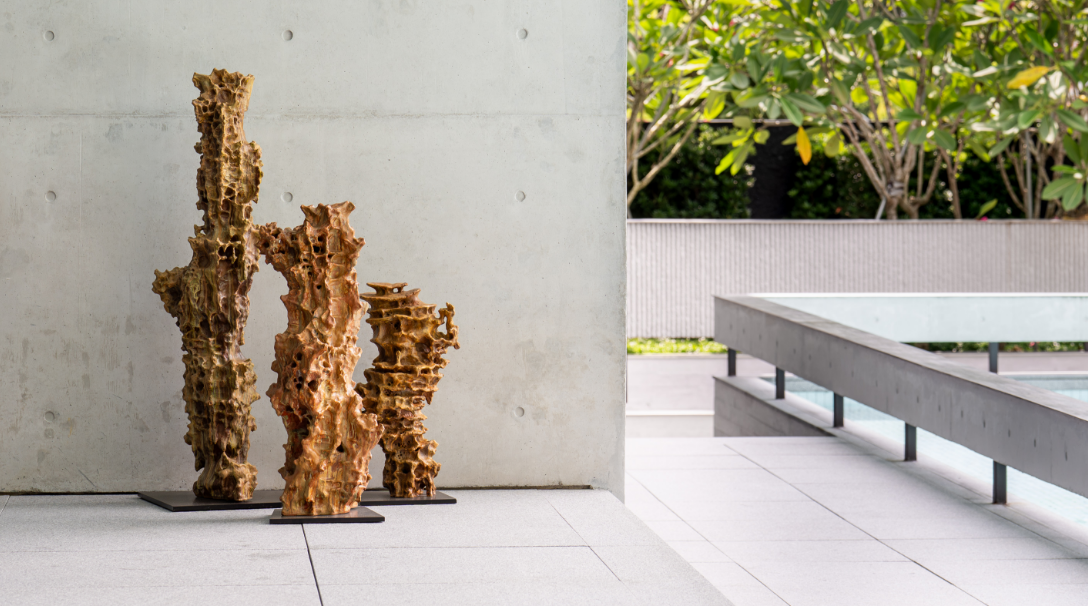
An Eternal Dialogue Series
Oh Chai Hoo
Oh’s practice spans a wide range of mediums, including painting, calligraphy, seal carving, ceramic, mixed media, and printmaking. His work is deeply rooted in Chinese literati culture and traditions, though he continually seeks to reinterpret these mediums of expression through a contemporary lens.
Read moreTransformation
Chua Chon Hee
Chua Chon Hee (1960- ) is a fine arts educator and a multi-disciplinary artist who works extensively with ceramics and prints. Her intuitive approach to art making is characteristic of her personality: humble, gently persuasive, and always purposeful. Her works are formally inspired by nature and spiritually rooted in the Zen philosophy of ‘being in the moment’; they reflect the immediacy of everyday human experiences through spontaneous, organic forms.
Read more