Studio II
Chen Wen Hsi. c. 1961 - 64, Mural Painting, 178 x 194 cm
b. 1906, Baigong Village, Guangdong Province, China - d. 1991, Singapore
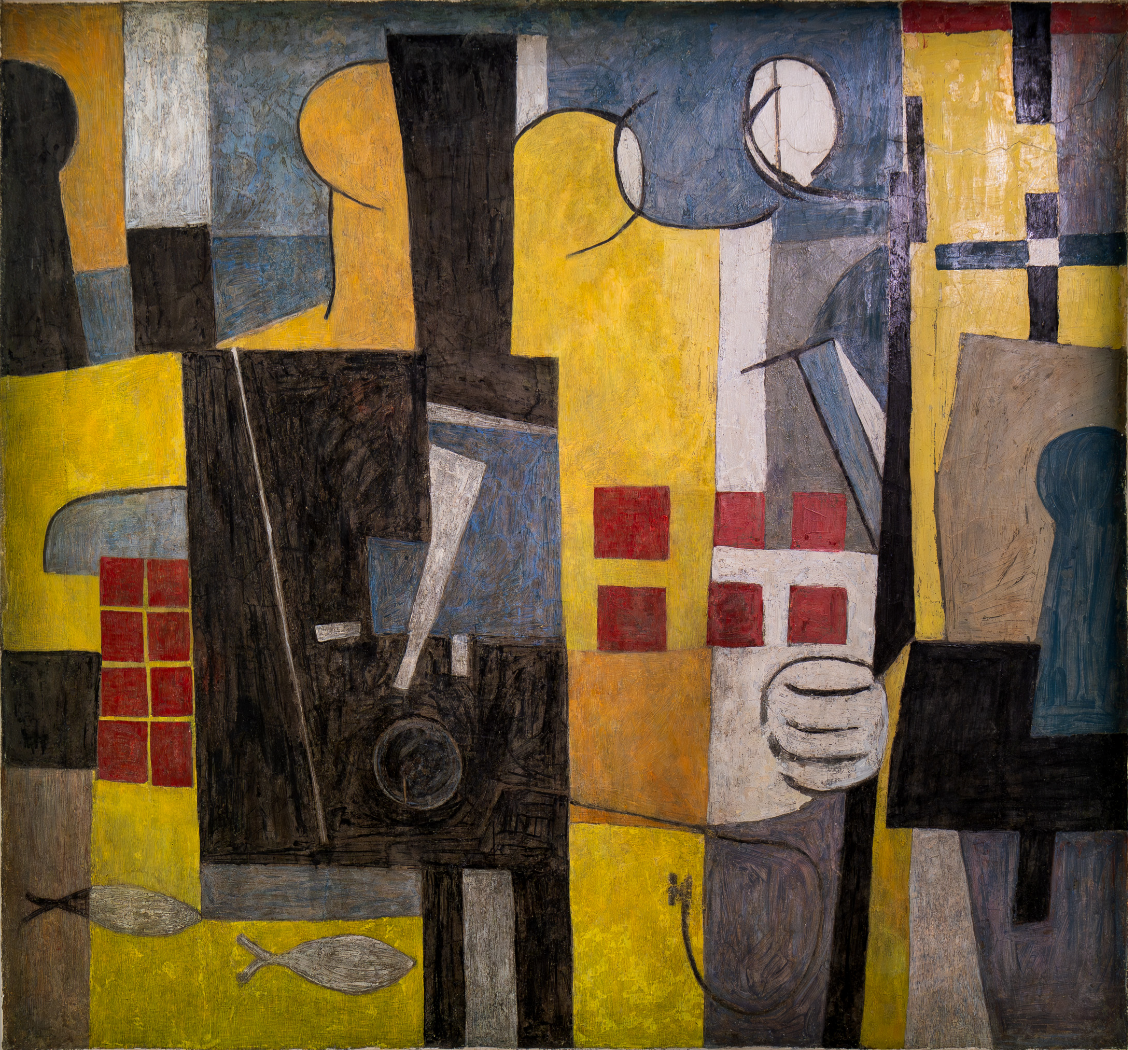
Chen Wen Hsi (1906-1991) was one of Singapore's most important pioneer artists and art educators. His work played a crucial role in shaping the Nanyang art style, which fuses Chinese art traditions with Western modernist influences and Southeast Asian themes. Chen’s earlier art training in China grounded him in classical Chinese aesthetics, particularly calligraphy and ink painting, while also exposing him to Western Modern art movements like Cubism and Post-Impressionism.
In 1958, Chen moved from the teachers’ quarters at the Chinese High School to his new house at 5 Kingsmead Road, located less than a kilometre from the campus. Around a year later, he had a stretch of double-sided wall specially constructed near the front porch and spent the next few years creating an abstract mural piece on each side. These murals were site-specific, integrated into the architecture of Chen’s residence. Their original positioning near the porch suggests that they were meant to be experienced intimately, as a window into the artist’s abode and a daily encounter between art and life.
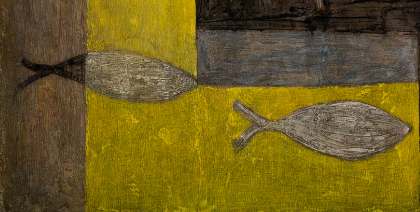
Measuring 178 x 194 cm, Studio II is the smaller of the two murals and stands as a landmark example of Chen's experimentation with abstraction and Cubist-inspired visual language in the period of 1950s-1960s. The composition is fractured into geometric planes, while colour shapes and lines overlap in a flattened pictorial space to reveal hints of figuration. Spotted in the lower left are two fish-shaped elements. The circular and oval shapes, some lined with calligraphic curves, along the upper half of the composition resemble faces or masks, suggesting a scene with human activity. Their soft, round contours and lines break up the angular structures and grid-like rigidity of the other elements. The juxtaposition of saturated yellows against darker masses also adds to the mural’s enthralling rhythm and tension.
Ultimately, Chen’s abstract expression aligns with the modernist ethos which prioritises form - structure, composition, and emotional resonance - over literal meaning or narrative clarity. Meaning is not fixed or didactic, but open to multiple interpretations.
Compositional Breakdown
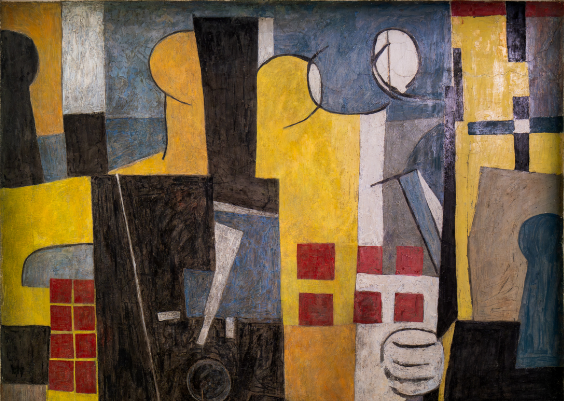
The composition is fractured into geometric planes, while colour shapes and lines overlap in a flattened pictorial space to reveal hints of figuration.Chen’s abstract expression aligns with the modernist ethos which prioritises form - structure, composition, and emotional resonance - over literal meaning or narrative clarity. The meaning of the work is open ended and open to multiple interpretations.
Spotted in the lower left are two fish-shaped elements.
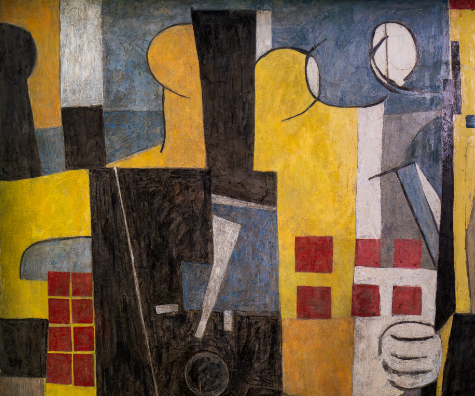
The circular and oval shapes, some lined with calligraphic curves, along the upper half of the composition resemble faces or masks, suggesting a scene with human activity. Their soft, round contours and lines break up the angular structures and grid-like rigidity of the other elements.