Blue Mountain
Chen Wen Hsi. 1981, Ink and colour on rice paper, 182 x 97 cm
b. 1906, Baigong Village, Guangdong Province, China - d. 1991, Singapore
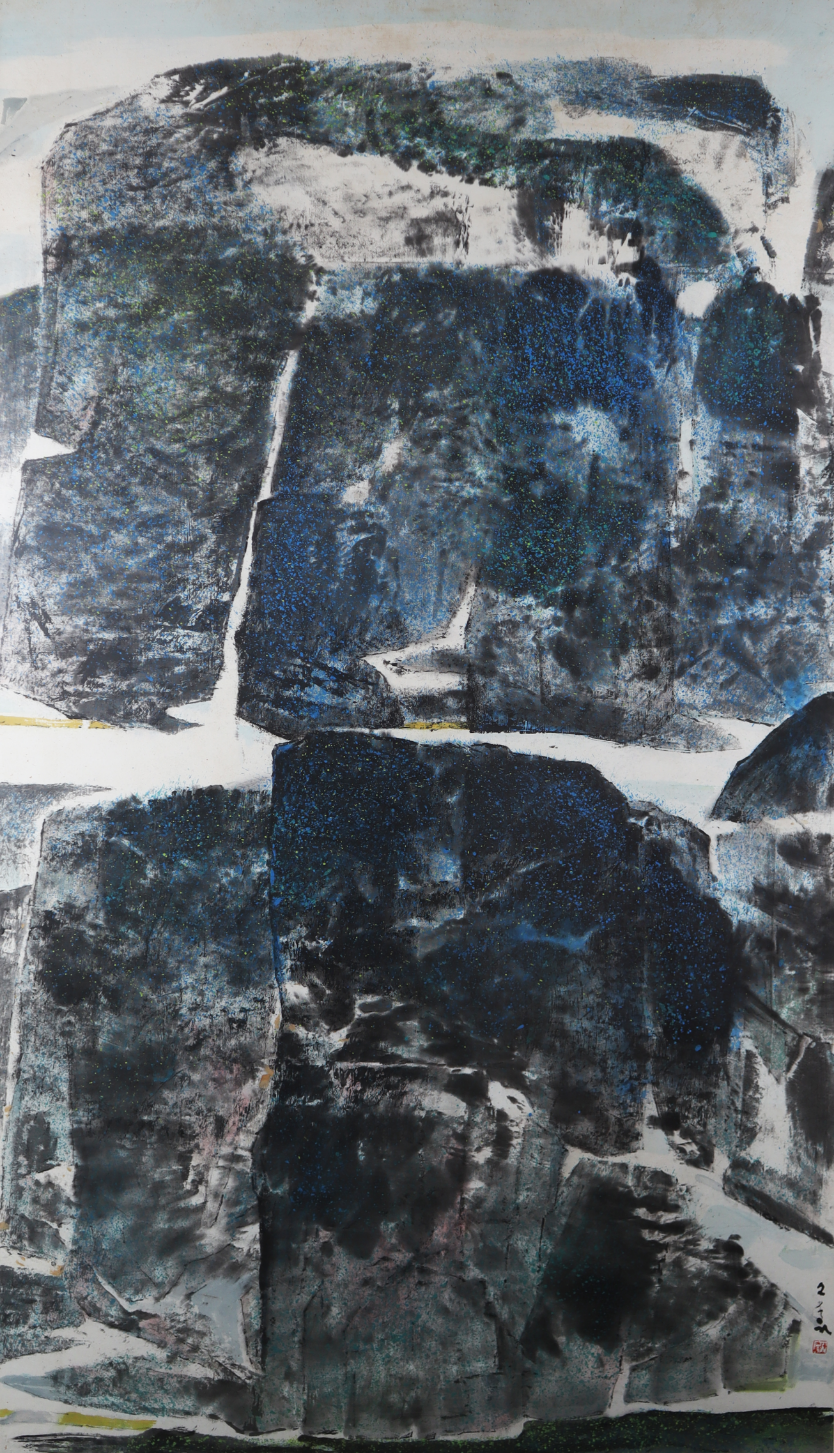
Chen Wen Hsi (1906-1991) was one of Singapore's most important pioneer artists and art educators. His work played a crucial role in shaping the Nanyang art style, which combines Chinese art traditions with Western modernist influences and Southeast Asian themes.
Blue Mountain reflects Chen’s mature synthesis of traditional Chinese ink painting and modern abstraction. The mountains are suggested through broad, angular brushstrokes, layered with tonal washes of black, blue, and grey. Chen breaks away from the intricate detailing often found in classical shanshui (山水;mountain-river landscape) painting, but retains the application of dry, rubbing techniques to evoke the rough, jagged textures of cliffs and rocks.
The long, vertical format heightens the impression of towering geological formations. Dense forms in dark, rich hues are visually interspersed by thin, luminous paths of white space, creating a sense of fluidity and openness that counters against the solid, immovable mass of the mountains. Strategic specks of shimmery green and unexpected strips of yellow lend an iridescent vitality to the visual field.
Blue Mountain is a culmination of Chen’s lifelong negotiation between tradition and modernity. The mountain forms are abstract and stylised - sharp, planar, and rhythmically stacked - suggesting a sense of structure and monumentality rather than topographical accuracy. The painting invites viewers not to ‘read’ a scene, but to inhabit a mood, to follow the rhythm of the brush, and to contemplate the immense strength of nature.
Compositional Breakdown
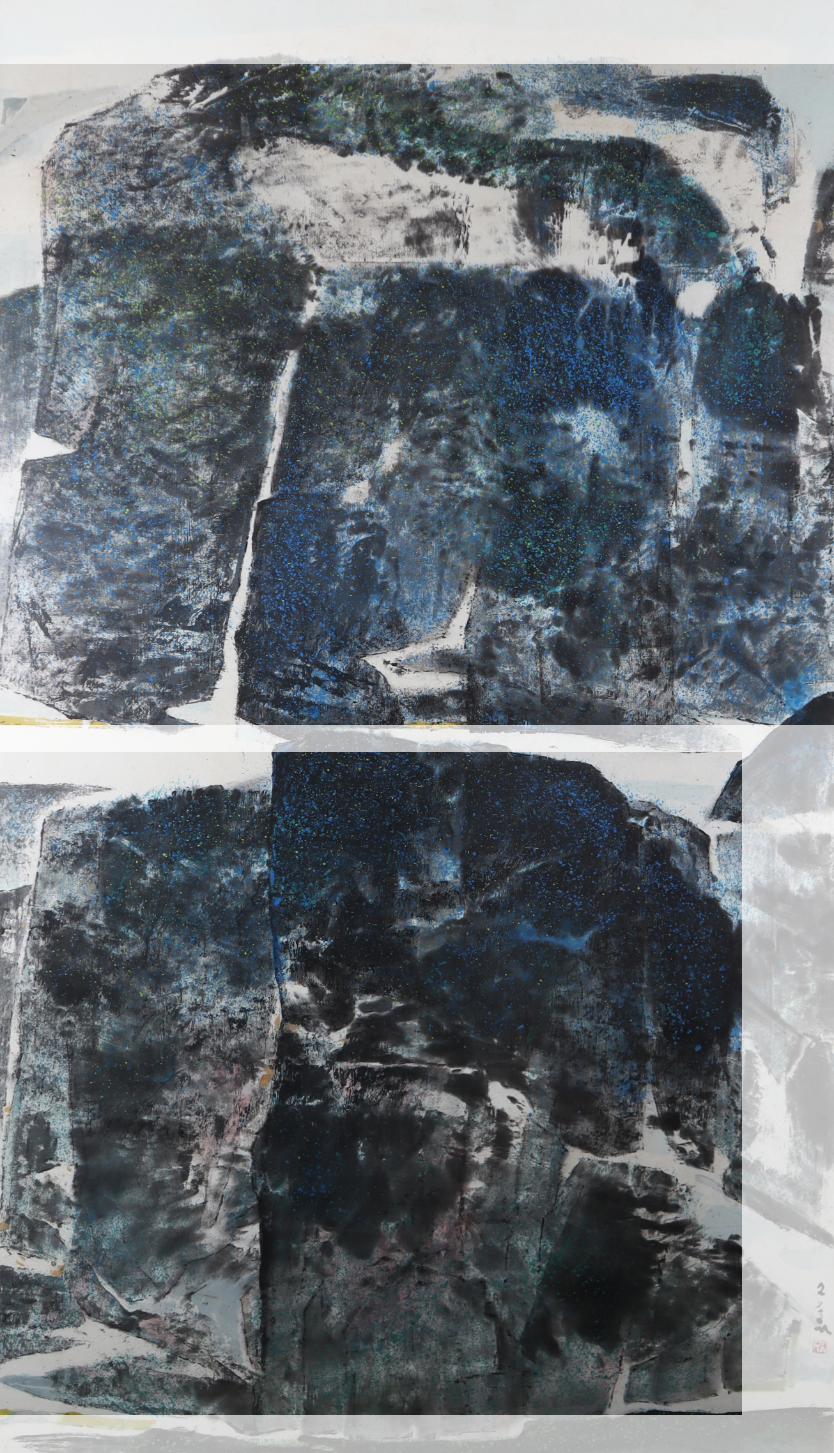
The mountains are suggested through broad, angular brushstrokes, layered with tonal washes of black, blue, and grey.Their forms are abstract and stylised - sharp, planar, and rhythmically stacked - suggesting a sense of structure and monumentality rather than topographical accuracy.
Chen breaks away from the intricate detailing often found in classical shanshui (山水; mountain-river landscape) painting, but retains the application of dry, rubbing techniques to evoke the rough, jagged textures of cliffs and rocks.
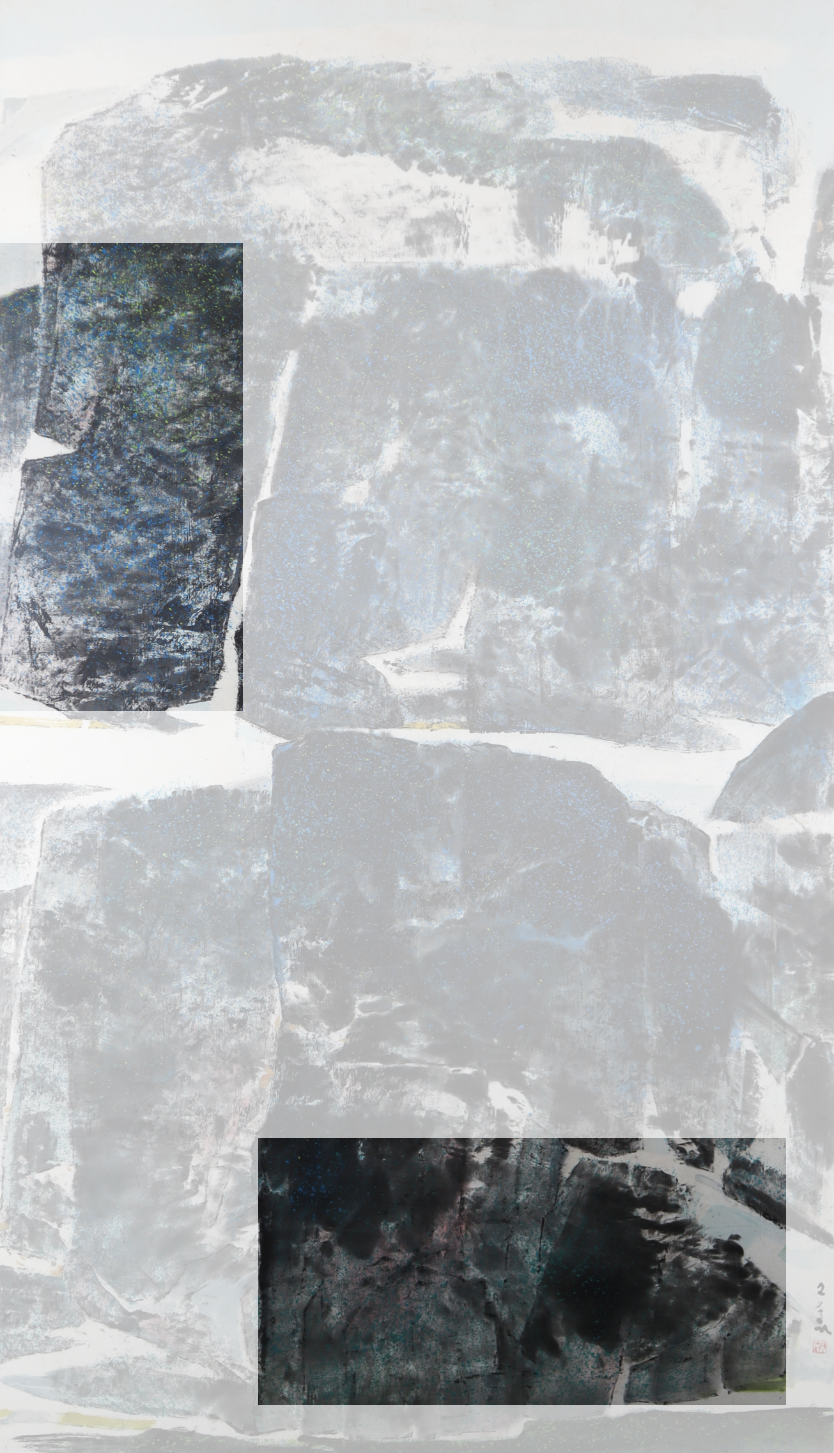
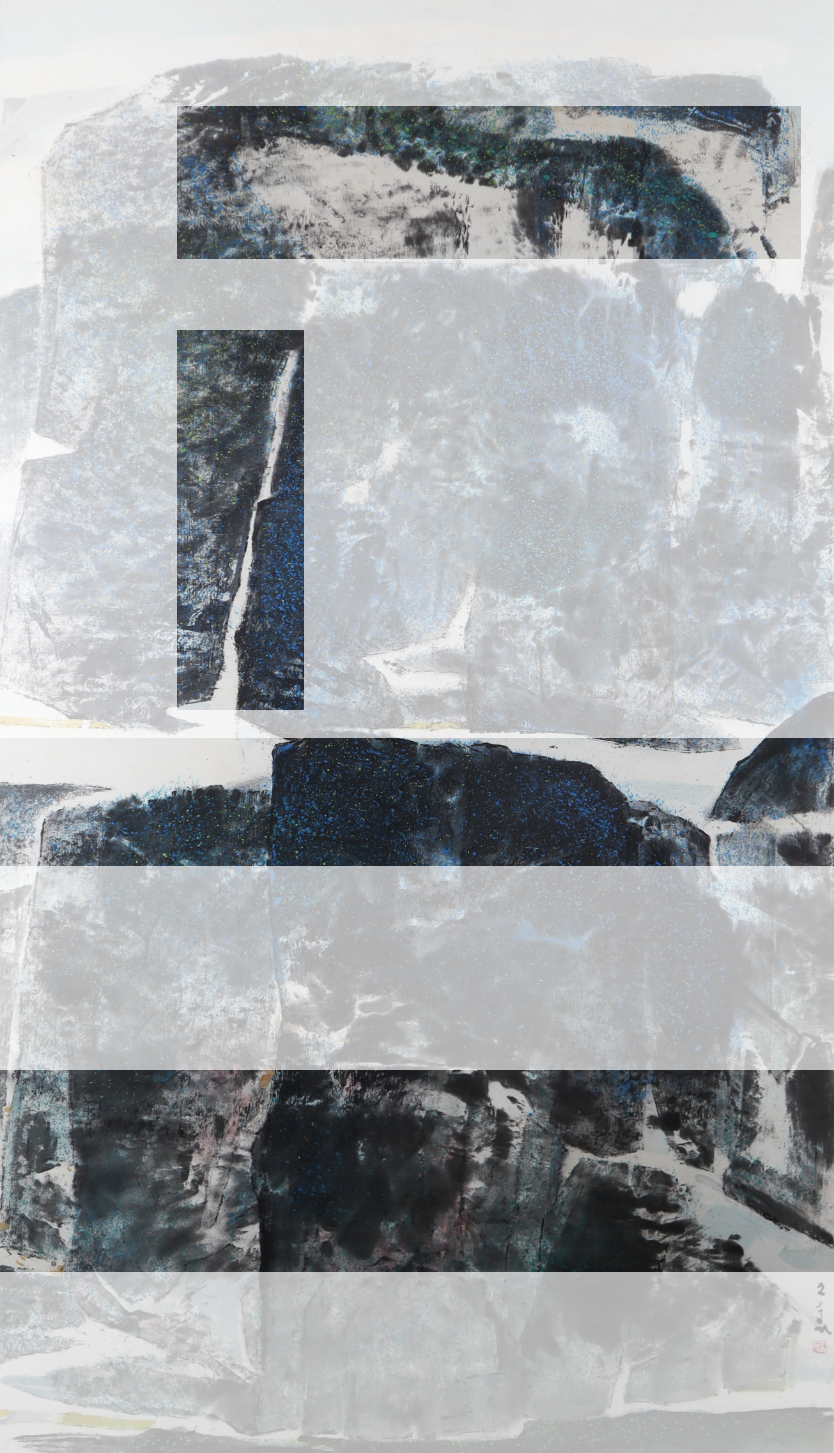
Dense forms in dark, rich hues are visually interspersed by thin, luminous paths of white space, creating a sense of fluidity and openness that counters against the solid, immovable mass of the mountains.
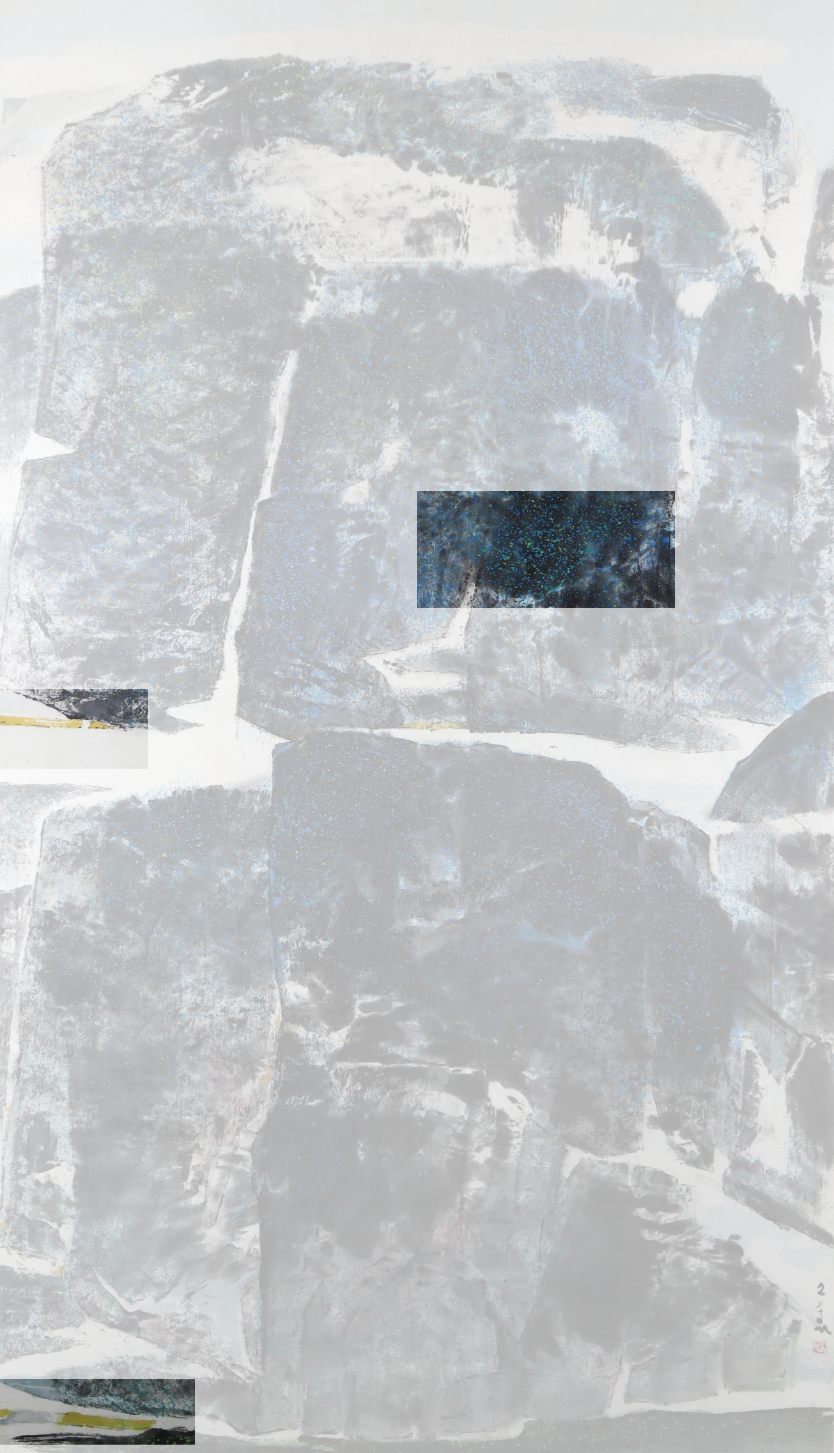
Strategic specks of shimmery green and unexpected strips of yellow lend an iridescent vitality to the visual field.