An Eternal Dialogue Series
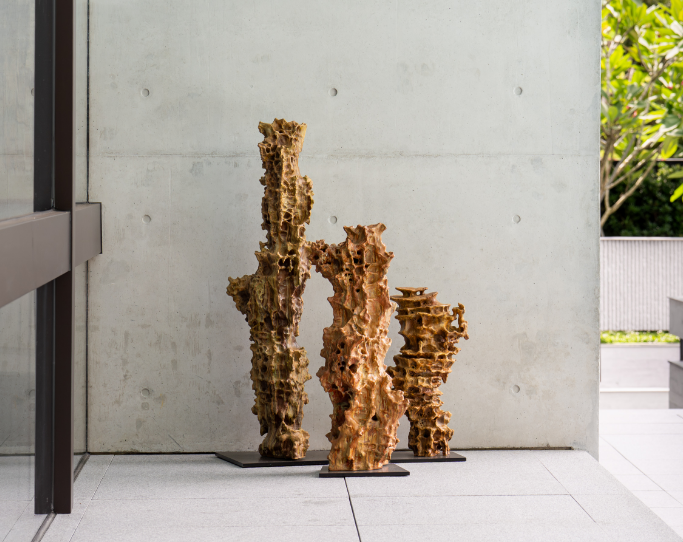
Oh Chai Hoo. 2025, Ceramic with colour (acrylic)
Smallest piece: 60 (H) x 23 (L) x 36 (W) cm
Medium piece: approx. 80 (H) x30 (L) ×26 (W) cm
Tallest piece: 116 (H) x 22 (L) x 33 (W) cm
b. 1960, Singapore
Oh Chai Hoo (1960- ) is a Singaporean artist acclaimed for his multidisciplinary practice and innovative approach to materials. Oh received formal training in traditional Chinese ink painting, calligraphy, and seal carving at the Nanyang Academy of Fine Arts (NAFA), graduating in 1982. He has since become a key figure in the local ink and seal-carving community. From 2013 to 2021, he served as Vice-President of the Siaw-Tao Chinese Seal-Carving a Calligraphy & Painting Society, contributing to the preservation and evolution of these classical art forms in Singapore.
Oh’s practice spans a wide range of mediums, including painting, calligraphy, seal carving, ceramic, mixed media, and printmaking. His work is deeply rooted in Chinese literati culture and traditions, though he continually seeks to reinterpret these mediums of expression through a contemporary lens.
This series of 3 ceramic sculptures, made from clay derived from the soil of Chen Wen Hsi’s former home garden, was a special commission by Audrey Koh for 5 Kingsmead Road. Through An Eternal Dialogue, Oh explores the profound resonance of scholar’s rocks (雅石, yashi) as both aesthetic objects and spiritual metaphors. Shaped by the forces of nature -water erosion, wind, and time, these naturally-weathered rocks are evaluated through four essential aesthetic criteria: Wrinkled (皱), Perforated (透), Slender (瘦), and Leaking (漏). More than objects, the rocks are mirrors of the cosmos, reflecting the interplay of solid and void, permanence and change, ways of nature and harmony with the Dao (Way of Heaven).
Since the rise of literati painting, the scholar’s rock has become an indispensable symbol in artistic creation - representing not only the beauty of nature but resilience, stillness, and inner character. Oh has observed that many of Chen Wen Hsi’s paintings - be they birds and flowers, gibbons, or landscapes - feature rocks as the grounding force of the composition. They serve as anchors of stability and catalysts of change, reflecting a deeply rooted scholarly sensibility.
Oh’s ceramic sculptures borrow the form of scholar’s rocks as a response to this rich cultural lineage and as a way to complement the spatial design of a new garden home. The presence of these sculptures extend the world within the literati painting into the lived realm of everyday life. Through this dialogue between art and environment, tradition and present, Oh invites viewers to engage with the quiet strength of the natural world, and to rediscover the art of stillness and spirit in their own surroundings.
Compositional Breakdown
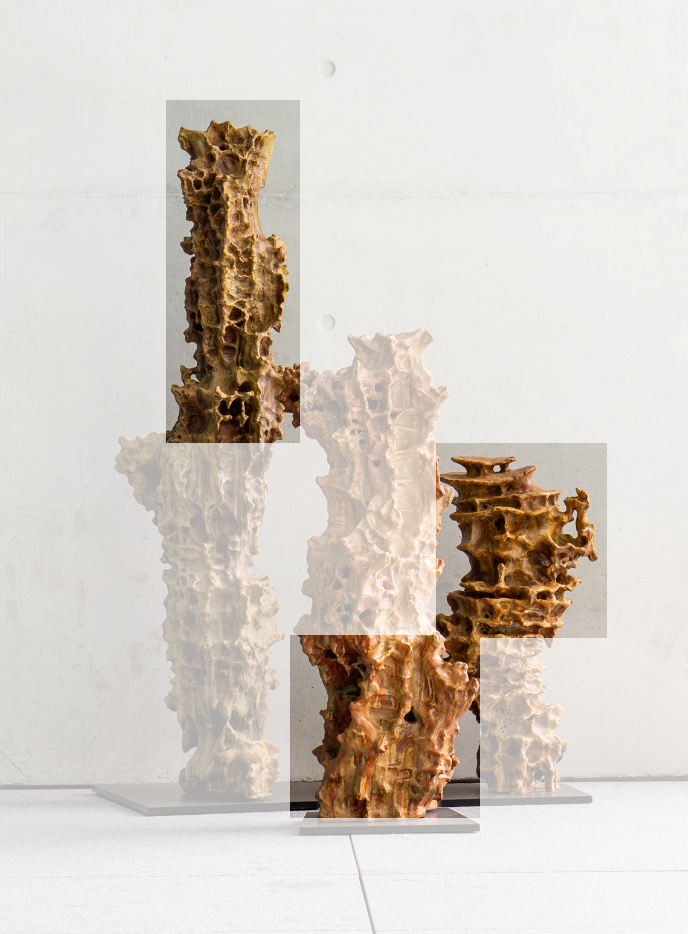
Oh explores the profound resonance of scholar’s rocks (雅石, yashi) as both aesthetic objects and spiritual metaphors. Shaped by the forces of nature - water erosion, wind, and time, these naturally weathered rocks are evaluated through four essential aesthetic criteria: Wrinkled (皱), Perforated (透), Slender (瘦), and Leaking (漏).
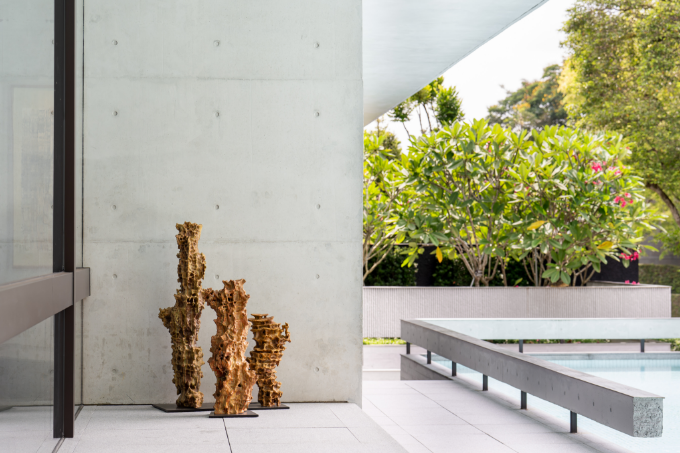
In Chinese literati painting, the scholar’s rock represents not only the beauty of nature but resilience, stillness, and inner character. They echo the rocks in Chen Wen Hsi’s paintings, which often feature as the grounding force of the composition. The presence of these sculptures extend the world within the literati painting into the lived realm of everyday life.